

 Language
 Language
How calcination changes kaolin
Calcination causes kaolin to move through several reactions as described below, though generally, the free moisture removal, dehydroxylation, and mullite phases are the most widely recognized.
Free moisture removal
Between 100° – 150°C, free moisture is driven off.
Dehydroxylation
After free moisture is removed, chemically bound moisture is driven off in a process known as dehydroxylation. This produces a product known as metakaolin and typically happens between 400° – 600°C.
At this point, the reaction may be stopped if metakaolin is the intended product. Metakaolin is widely used as a supplementary cementitious material (SCM), allowing it to replace a portion of the clinker used in cement.
Exothermic re-crystallization
Beyond dehydroxylation, exothermic re-crystallization* causes the metakaolin to transform to the spinel phase. *The exact reaction occurring here is still up for debate.
Mullite formation
After the spinel phase has been reached, crystals of mullite begin to form from the spinels. This typically occurs at temperatures beyond 1050°C.
Cristobalite formation
If the temperature is allowed to exceed 1100°C, a carcinogenic material known as cristobalite will form.
Kaolin calcination is most commonly carried out in a rotary kiln, often referred to as a calciner. This thermal processing device is incredibly flexible and can be configured to meet a wide variety of processing conditions.
Controlling properties of kaolin products through calcination
Calcination can be used to control a variety of end product characteristics when working with kaolin. Some of the most common characteristics targeted during calcination include:
Abrasivity
Brightneess
Color/whiteness
Opacity
Density
Surface area
Particle size distribution (PSD)
Refractoriness
As is the case in most thermal processing applications, the end product is primarily a result of the raw material feedstock characteristics, combined with the parameters chosen for calcination.
Feedstock characteristics
Kaolin clay sources can vary significantly, with a number of accompanying impurities possible. Similarly, chemical and physical properties of kaolin sources vary as well. As a result, varying sources of kaolin often respond to calcination in different ways, making it somewhat unpredictable.
Calcination parameters
Both time and temperature impact the properties of kaolin and can therefore be used to control the end product characteristics.
For example, varying retention time can be used during the metakaolin phase to produce a metakaolin with different properties. The authors of a recent study stressing the need for improved online monitoring of the kaolin calcination process give an example: Once kaolin has transformed to metakaolin, which exhibits excellent pozzolanic reactivity, the pozzolanic reactivity will decline if the material is allowed to stay in the kiln. In addition to this reduced reactivity, however, the metakaolin will also simultaneously improve in whiteness, while abrasiveness remains low – characteristics that lend it to use in the pharmaceutical industry. Further processing into the mullite phase will produce an even whiter, but much more abrasive kaolin.
According to the authors, the ability to monitor the calcination reaction in real time is becoming increasingly more important in creating kaolin products with optimal characteristics.
Testing
The variability exhibited by kaolin, combined with the mineral's broad range of possibilities when calcined, and the litany of potential end uses, gives producers a flexibility to create a wide range of kaolin products. This flexibility also makes testing in a facility such as the FEECO Innovation Center an important part of developing a calcined kaolin that meets its intended application.
The has a number of test kilns for conducting kaolin calcination tests at both batch and continuous pilot scale under varying process conditions. The data gathered during testing can then be used to scale up the process to engineer a commercial-scale, custom unit, tailored to the precise requirements of the application at hand.
The facility also boasts an automation control system that allows real-time data to be collected and trended for analysis, or even adjusted in real time from a user interface, providing unparalleled process transparency. Real-time data points collected include:
Feed and product rates
Temperatures (feed end, internal, thermal oxidizer, product, and exhaust gas)
Natural gas flow rates
System pressures
Gas sampling & analysis
And more.
Conclusion
Calcined kaolin materials are important in many products and industrial processing endeavors, as is exhibited by their growing market demand. Calcination backed by expertise is essential in controlling and reaching the desired end product characteristics of a given kaolin material. And while calcination is a relatively established thermal technique, the variability of raw kaolin materials, combined with its temperamental response to calcination and the many specific requirements of the market, demand testing to produce a product of precise characteristics.
Let's discuss calcined kaolin. What is it and why should we use it in our paints, paper, plastics, rubber and ceramics.
Naturally-occurring kaolin is known as “hydrous kaolin” because it contains water within its crystal lattice. This water cannot be removed by simply drying the kaolin.
Calcining a mineral is to heat it to a temperature where a phase transition occurs, usually the loss of a volatile component. In the case of kaolin it loses its waters of crystallisation.


As you heat kaolin to 800ºC, it loses water in the form of hydroxyl (-OH) groups to form Metakaolin:
2 Al2Si2O5(OH)4 -› 2 Al2Si2O7 + 4H2O
Metakaolin is an interesting material. When you add it to concrete, it acts as a pozzolan. This means it enhances the strength of the concrete, a useful property in civil engineering and oil-well cementing.
To form calcined kaolin, you need to continue to heat it all the way to 1050ºC. Two different reactions occur on the way there. Firstly the formation of spinel at 950C:
2 Al2Si2O7 -› Si3Al4O12 + SiO2
Then the spinel phase transforms to the mineral mullite plus the highly crystalline cristobalite, SiO2:
3 Si3Al4O12 -› 2 Si2Al6O13 + 5 SiO2
But enough of the chemical reactions! What we need to know is that calcining causes the kaolin structure to collapse and become denser, which improves its opacity and its whiteness. The particles become sharp and hard, but also more porous because of the voids formed where the –OH groups were. Flash calcining is a method where the kaolin is heated very quickly. This increases the number of voids compared to conventional methods of calcining.
These changes give calcined kaolin some useful properties in various applications:
Paints
Better opacity and whiteness make calcined kaolin a great extender for titanium dioxide. The hard calcined kaolin particles help to improve the structural strength of a coating, and also the scrub-resistance of both water and oil-based paints. They also add corrosion-resistance and fire-resistant properties to the paint.
The disadvantage is the cost. Calcination and the subsequent milling of the hard calcined particles both require a lot of energy. This makes calcined kaolin around three times more expensive than hydrous kaolin. However it is still less than half the price of titanium dioxide. So it is still a good option as an extender, particularly in paints above CPVC (critical pigment volume concentration).
Ceramics
Good whiteness is useful in ceramics too. However the most useful property to the ceramist is the fact that calcined kaolin it is already calcined. Hence it will have no plasticity and there will be no expansion or contraction of this material. It imparts mechanical strength and a fine white surface texture.
It is easy to tell calcined kaolin from hydrous kaolin by looking at their data sheets. Just look at the LOI (Loss on Ignition) value. For water-washed kaolin it is around 13%, but for calcined kaolin it will be zero. The LOI test basically calcines the kaolin. Hence the LOI is the percentage mass lost due to the loss of the waters of crystallisation.
Rubber and plastics
Using calcined kaolin as a filler in rubber and plastics helps impart tensile strength. Hence it is a reinforcing filler instead of being non-reinforcing like hydrous kaolin. The fire-resistant property of calcined kaolin plus the fact that it is an electrical insulator is especially useful in the plastic covering of electric cables. It also imparts uv-resistance which is why it is often added to greenhouse film and garden furniture.
Pesticides
An unexpected use of calcined kaolin is as a pesticide. When sprayed onto fruit, the fine sharp calcined kaolin particles deter pests by getting into their joints and irritating them. At the same time it reflects the sun and acts as a sunscreen.
Kaolin is an inorganic non-metallic mixture. Calcining kaolin is to sinter kaolin in the calciner to a certain temperature and time, so as to change its physical and chemical properties to meet certain requirements.
Water washed kaolin is the best raw material for producing high-grade porcelain. After deep processing and modification, the product can become an ideal raw material for papermaking, rubber, paint, coating and other industrial departments.
However, in all applications of kaolin, it must be processed into fine powder before it can be added to other materials and fully integrated.
Firstly, calcined kaolin has been calcined, and the crystal form and original kaolin have changed; The washed kaolin is only a physical treatment and will not change the properties of the original kaolin.
Secondly, there is a large difference in whiteness. Generally, the whiteness of kaolin will increase after light burning, but water washing will not significantly increase the Whiteness:
Calcined kaolin: The whiteness after calcination is more important. The higher the whiteness, the better the quality. The ceramic process stipulates that drying at 105 ℃ is the classification standard of natural whiteness, and calcining at 1300 ℃ is the classification standard of calcined whiteness.
Water washing kaolin: Prepare kaolin into slurry with solid gas volume of about 40%, add dispersant, add grinding medium (such as quartz sand, porcelain beads, glass beads, nylon polyethylene beads, etc.), grind for a certain time, screen, and then precipitate and grade.
Different uses. According to different calcination temperatures, kaolin can be used as papermaking additive and refractory aggregate, while water washed kaolin is generally used as papermaking filler. Moreover, calcined kaolin mainly refers to hard kaolin (coal series kaolin). The raw soil has no adhesion and can not be directly used as raw material for papermaking or refractory materials, so it needs to be calcined for later application; The raw clay of water washed kaolin has adhesiveness and can be directly used as refractory binder or papermaking filler. As for papermaking filler, the whiteness of calcined kaolin is not less, and the cost is relatively high
Calcination will also lead to the increase of kaolin particle size. Although the specific surface area is reduced and the adsorption property is reduced, the surface energy is reduced, which improves the dispersion of kaolin, and amorphous makes the structure loose, which can also improve the dispersion. Calcined and dehydroxylated kaolin is usually used as a reinforcing filler for rubber and plastics after grinding and refining or chemical surface modification.
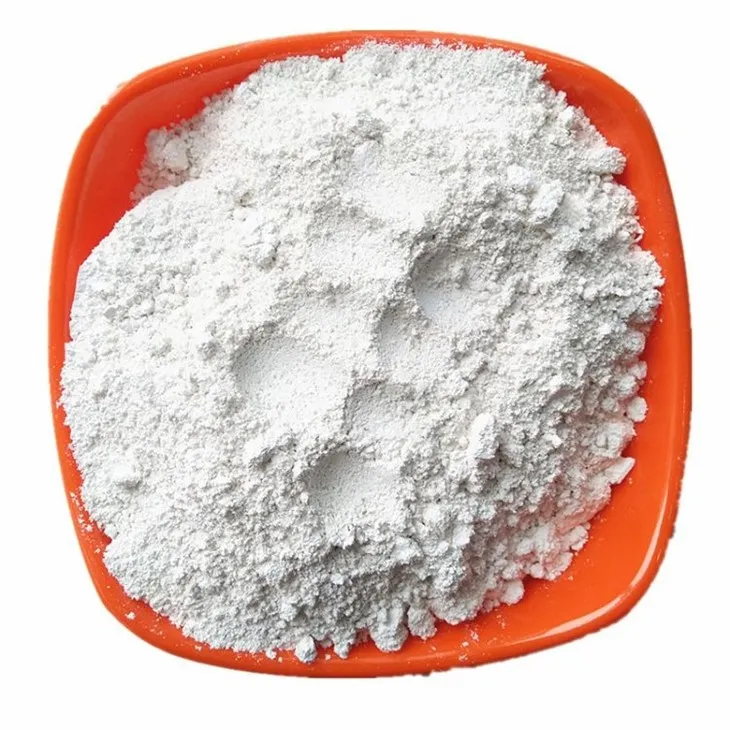
Have you ever wondered how Calcined Kaolin Powder is made? This unique substance is a type of clay that is heated to high temperatures, causing it to become more concentrated and purer. The production process involves several steps, from mining the raw material to grinding and packaging the final product.
First, the kaolin clay is extracted from the earth and transported to a processing plant. Once there, it is crushed and ground into a fine powder using specialized equipment.
This powder is then heated in a furnace to temperatures of up to 1000°C, causing it to transform into Calcined Kaolin Powder. The heat removes any impurities and increases the clay's whiteness and brightness.
Calcined Kaolin Powder has some amazing properties that make it highly sought after in many industries. Its high brightness and whiteness make it an excellent substitute for titanium dioxide in paint and coatings.
It also has excellent thermal and electrical insulation properties, which make it ideal for use in ceramics and refractories.
Calcined Kaolin Powder is a complex product that involves many steps throughout the production process. However, the end result is a unique substance that has a wide range of applications and benefits.
Whether you are in the paint, ceramics, or refractories industry, this special type of clay can help you create high-quality products that stand out from the competition.
Calcined Kaolin Powder is a mineral substance that is derived from kaolin, a type of clay that is found in many parts of the world. This amazing powder has many benefits that make it a great addition to various industries such as construction, paper, ceramics.
One of the most significant advantages of Calcined Kaolin Powder is its ability to improve the physical properties of materials by enhancing their strength, stiffness, and durability.
It is known for its ability to increase brightness in products.
It is versatile and can be used in many different applications, and often used as a substitute for other minerals or pigments because of its unique properties.
This powder is also easy to mix with other materials, making it a great additive for creating new products.
It's eco-friendly, and its production process has a low impact on the environment.
It is a cost-effective solution for businesses looking to improve the quality of their products while reducing production costs.
This powder can be used in a variety of industries such as paint, rubber, plastic, and many others to improve product performance and quality.
With its unique properties and benefits, Calcined Kaolin Powder is an excellent choice for businesses that are looking for a reliable, cost-effective additive to enhance their products.
Uses of Calcined Kaolin Powder in Various Industry
Calcined Kaolin Powder is a type of clay that is made by heating natural kaolin at high temperatures. It's a versatile mineral that has a wide range of applications in various industries.
One of the main advantages of calcined kaolin powder is its unique properties, such as its excellent whiteness, chemical stability, low abrasiveness, which make it suitable for use in a variety of applications.
Some common uses of calcined kaolin powder include in the paper industry, where it's used as a coating material to enhance the quality of paper.
It is also used in the ceramics industry, where it's added to clay to improve its strength and shrinkage. The paint and coating industry also uses it as a functional filler to improve the properties of paint and coatings.
In the plastics industry, calcined kaolin powder is added to plastics to improve their mechanical and thermal properties. The rubber industry uses it as a reinforcing filler to improve the strength of rubber products.
It is also used as an additive to enhance the properties of concrete, mortar, and other construction materials in the construction industry.
Consequently, it has a wide range of applications in various industries, which make it an extremely versatile and valuable material.
The unique properties of this mineral make it an ideal filler, coating material, and additive in a diverse range of products.
So if you're looking for a multifunctional mineral that can provide excellent performance, look no further than it.

Before using any product or substance, it's always important to know what potential health risks it may pose. When it comes to calcined kaolin powder, there are a few things you should be aware of.
Prolonged exposure to the powder through inhalation can cause respiratory irritation and may lead to respiratory problems. This is why it's important to always wear a face mask and work in a well-ventilated area when handling calcined kaolin powder.
If the powder comes into contact with your eyes, it can cause irritation and redness. To prevent this, always wear protective goggles when working with calcined kaolin powder.
While calcined kaolin powder is generally safe for use, it's always essential to handle it with care and to follow the recommended safety precautions.
By being aware of the potential health risks and taking the necessary safety measures, you can use this powder safely and effectively in your projects.
Our company has more than 7000 square meters product processing area . We have two departments: raw material processing department and mineral products deep processing Department.

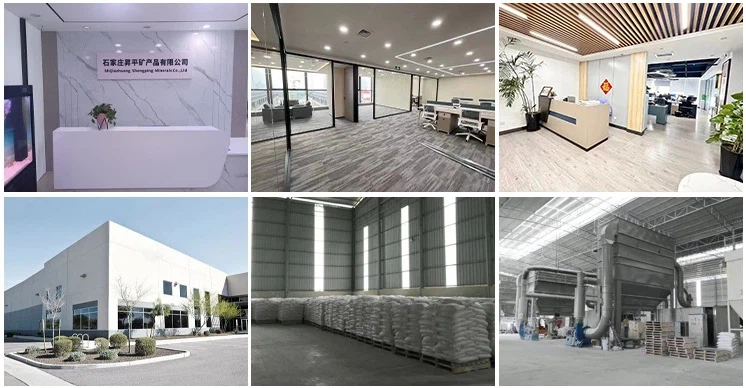
We're professional calcined kaolin manufacturers and suppliers in China, specialized in providing high quality customized service. We warmly welcome you to wholesale high-grade calcined kaolin in stock here from our factory.
crystal clear ball, Himalayan salt balls for decoration, mica flakes for pigment(0/10)
