

 Language
 Language
Product Application
These products are highly demanded in cosmetics, paper making, rubber, coating,agriculture,building,decoration ,entertainment and other areas.
Production Market
At present, our company's products have been exported to Japan, South Korea, Singapore, the United States, Europe and other countries and regions in the world.Our products are highly recognized and favored by our customers.
Client Satisfaction
Customer satisfaction is our first priority , and it defines everything we do. We constantly seek out and consider client input, working together to customize our offerings to meet their unique needs.What sets us apart is our unwavering dedication to ensuring client satisfaction remains our constant focus and priority.
Lava Stone Benefits
Emotional Benefits
Lava stones are wonderful for calming the emotions. Because the stones come from raw energy, they're considered to represent rebirth and shedding unneeded layers of emotional attachment. Fire's physical embodiment is the Lava Stone. It is the only rock known to be formed from nothing but fire thus, providing strength and power. For someone who has difficulty making decisions, or perhaps timid, the Lava Stone provides them strength and clear thinking.
Spiritual Benefits
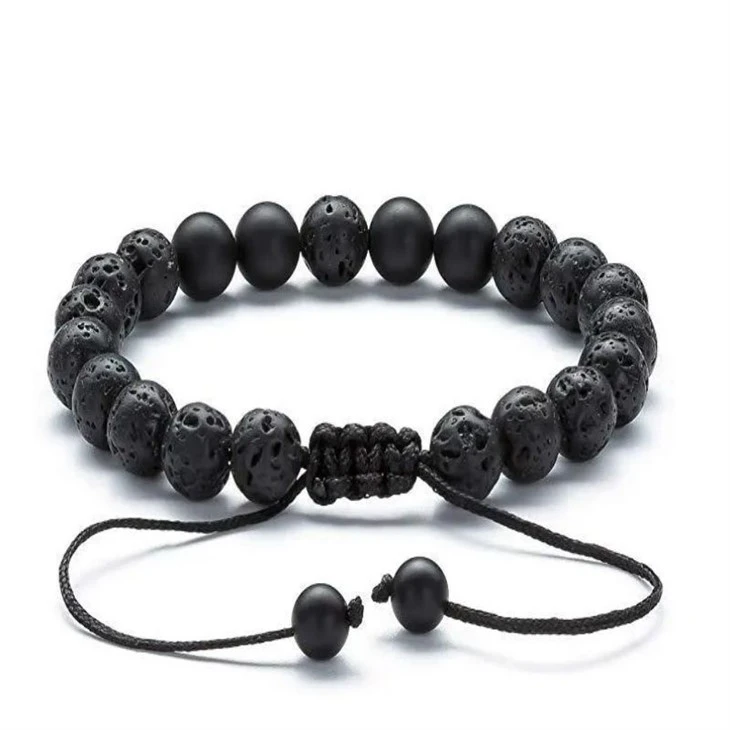
The lava stone is typically like other healing gemstones. It's recommended you wear your lava stone as close to the skin as possible. This allows better absorption, giving it easier access so that the energy can flow. To clear negative emotions, it's said you should wear a bracelet so that the stones are close to your pulse. Or a necklace so that the stones are close to your heart.

Basalt: A dense, durable rock widely used for road construction, concrete aggregates, and as a building stone.
Pumice: Its lightweight and porous nature makes it ideal for concrete blocks, insulation, and lightweight structures.
Scoria: Commonly used in landscaping and construction as a drainage material due to its high porosity.
Andesite: Another dense volcanic rock, often crushed and used for road bases and construction materials.
Pumice and Scoria: Improve soil aeration, drainage, and water retention, making them ideal for gardening and large-scale agriculture.
Volcanic Ash: Naturally rich in minerals, it serves as an excellent fertilizer, boosting soil fertility and supporting sustainable farming practices.
Basalt Fiber: A high-strength, heat-resistant material used as an alternative to fiberglass in construction, automotive, and aerospace industries.
Pozzolan: A form of volcanic ash used as a cement additive, enhancing the strength and durability of concrete.
Obsidian: Its razor-sharp edges make it valuable for surgical tools, cutting instruments, and traditional craftwork.
Perlite: Expanded volcanic glass used in filtration, thermal insulation, and lightweight construction materials.
Pumice: Used as an abrasive in polishing compounds and exfoliating skincare products, including scrubs and soaps.
Volcanic Clay: Mineral-rich clay used in facial masks and skincare treatments for its detoxifying and nourishing properties.

Color
The color of volcanic rocks varies widely depending on their mineral composition and the conditions under which they formed. Basalt, for example, typically appears dark gray to black due to its high content of ferromagnesian minerals like pyroxene and olivine. Andesite often exhibits shades of gray, green, or brown, reflecting its intermediate composition. Rhyolite tends to be light-colored, ranging from pink and beige to white, owing to its abundance of light-colored minerals like quartz and feldspar.
Texture
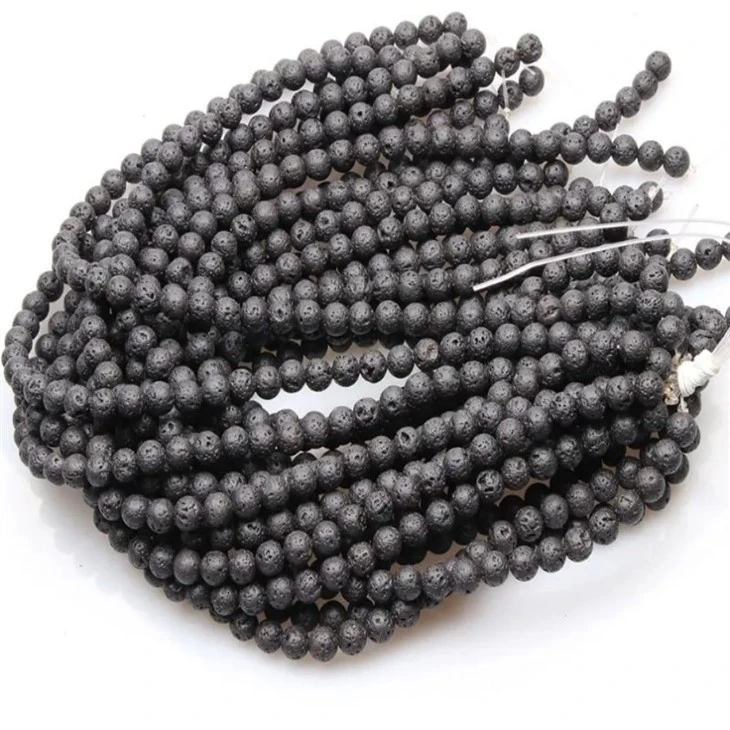
Texture is the size, shape, and arrangement of mineral grains inside the rock. Volcanic rocks can exhibit a range of textures, including fine-grained, coarse-grained, glassy, and vesicular. Basalt and andesite typically have fine-grained textures due to rapid cooling of lava flows, while rhyolite can display a fine-grained to glassy texture as a result of its high silica content. Obsidian, a type of volcanic glass, is characterized by its smooth, glassy texture, formed when lava cools rapidly without crystallizing. Pumice, with its vesicular texture filled with gas bubbles, appears porous and lightweight.
Hardness
The hardness of volcanic rocks varies depending on their mineral composition and the degree of crystallization. Basalt and andesite, composed of minerals like plagioclase feldspar and pyroxene, tend to be relatively hard and resistant to weathering. Rhyolite, with its fine-grained texture and abundant silica minerals, can also exhibit hardness comparable to granite. Obsidian, although glassy in texture, is surprisingly hard and capable of producing sharp edges when fractured. Pumice, with its porous and lightweight structure, is relatively soft and can be easily scratched or crushed.

Density
Density refers to the mass per unit volume of a rock and is influenced by factors such as mineral composition and porosity. Basalt and andesite, being dense igneous rocks, typically have densities ranging from 2.8 to 3.0 g/cm³. Rhyolite, with its lower density due to its higher proportion of silica and gas bubbles, may exhibit densities between 2.3 and 2.6 g/cm³. Obsidian, being a type of volcanic glass, has a relatively low density compared to crystalline rocks, ranging from 2.3 to 2.5 g/cm³. Pumice, with its highly porous structure and abundant vesicles, has a remarkably low density, often less than 1 g/cm³, allowing it to float on water.
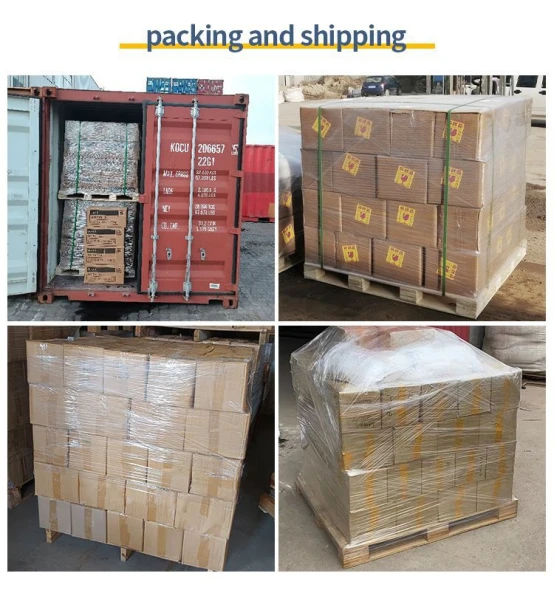

We're professional volcanic rock balls manufacturers and suppliers in China, specialized in providing high quality customized service. We warmly welcome you to wholesale high-grade volcanic rock balls in stock here from our factory.
Himalayan salt soap for face deep cleaning, big fluorite crystal, black gold silver mica flakes(0/10)
