

 Language
 Language
Product Application
These products are highly demanded in cosmetics, paper making, rubber, coating,agriculture,building,decoration ,entertainment and other areas.
Production Market
At present, our company's products have been exported to Japan, South Korea, Singapore, the United States, Europe and other countries and regions in the world.Our products are highly recognized and favored by our customers.
Client Satisfaction
Customer satisfaction is our first priority , and it defines everything we do. We constantly seek out and consider client input, working together to customize our offerings to meet their unique needs.What sets us apart is our unwavering dedication to ensuring client satisfaction remains our constant focus and priority.
|
Name |
Black Lava tiles, black Basalt tiles, black Volcanic tiles, etc. |
|
Application |
Wall cladding, Floor tiles, Swimming pool, TV background, etc |
|
Available Size |
300x300, 300x600, 600x600, 600x900mm, or as customers |
|
Finish |
Honed, saw-cut, split, polished, etc. |
|
Color |
Black, Rusty, Red, etc. |
|
Type |
Tiles, Cut-to-size, Pavers, Blocks, etc. |
|
Other Available Products |
Stone Slabs & Tiles, Steps, Tops, Shower Trays, Bath Tubs, Paving Stones,Wall Caps, Retaining Wall Stone, Swimming Pool Paver &Coping Stone,Flower Pots, Sculpture, Mushroom Stone, Stepping Stone, Loose Stone, Mailbox, Bentch Tops, etc |
|
Advantages |
1) Decades in natural stone field; 2) Manufacturer direct competitive price; 3) Rich experience in customization; 4) High quality, uniform color and style; 5) Our professional sales will help you to handle everything. |
|
Packing |
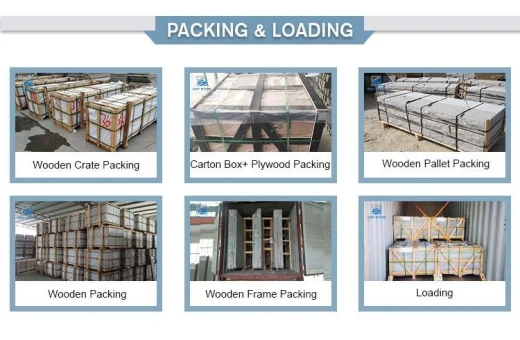
Strong Fumigated Wooden Crates or Fumigated-free crates |
Advantages of volcanic rock materials
Respiratory function
The natural holes of the volcanic rock give it a unique breathing function, which is to use the holes to absorb enough water in rainy days, and under the sunshine in sunny days, the water is slowly released to regulate the temperature of the surrounding air. This function is mostly suitable for pedestrian streets, squares, especially around flowers, grasses, and trees, so that rainwater from the sky can seep into the ground and communicate with the moisture in the ground to ensure that the plants have sufficient moisture and there is no strong sunlight around them.
Light absorption and heat resistance
Volcanic rock products are formed by the condensation of volcanic lava after eruption. It has obvious light absorption and heat resistance function due to the generation of absolute high temperature. It will never be as hot as granite under strong sunlight, and there is no feeling of iron baking. In the cold winter, it will not be like granite.
Sound absorption and dryness reduction
The unique natural holes of volcanic rock are the only natural sound-absorbing material among all building materials. It is suitable for places such as stations, subways, underground projects, and noisy production workshops and squares.

Formation of Volcanic Rocks
Magma to Lava
Magma rises toward the surface due to its lower density compared to surrounding rocks. As it ascends, it undergoes decompression and degassing, forming bubbles and releasing gases. When magma reaches the surface, it erupts as lava or volcanic ash. The nature of the eruption—whether explosive or effusive—depends on the magma's composition, gas content, and viscosity. The transition from magma to lava marks the beginning of the rock's cooling process.
Cooling and Solidification
Upon eruption, lava cools rapidly, either in air or water, taking hours to days to solidify. This rapid cooling inhibits the growth of large crystals, leading to fine-grained or glassy textures in the resulting rock. The specific cooling environment (air or water) further shapes the rock's characteristics.
Crystallization
As lava cools, minerals crystallize out of the molten solution, forming the solid rock. The cooling rate directly influences the texture; very quick cooling can yield a glassy appearance, while slightly slower cooling produces fine crystals.
Silica Content: >65%
Mineral composition: Dominated by light-colored minerals like Quartz, potassium feldspar, and muscovite.
Characteristics: Light-colored, high viscosity, and associated with explosive eruptions.
Examples: Rhyolite, dacite.
Silica Content: 52-63%
Mineral composition: Contain a mix of light and dark minerals, such as Amphibole, sodium-rich plagioclase feldspar, and biotite.
Characteristics: Gray coloration, moderate viscosity.
Examples: Andesite.
Silica Content: 45-50%
Mineral composition: Rich in dark, ferromagnesian minerals like Pyroxene, olivine, and calcium-rich plagioclase feldspar.
Characteristics: Dark-colored, low viscosity, and associated with fluid lava flows.
Examples: Basalt.
We're professional volcanic rock plate manufacturers and suppliers in China, specialized in providing high quality customized service. We warmly welcome you to wholesale high-grade volcanic rock plate in stock here from our factory.
Himalayan Salt Ball, china clay powder, Lava Rock polished basalt floor tile(0/10)
